A bone spur on top of foot can appear as a hard bump that makes walking or wearing shoes uncomfortable. These bony growths often develop around the midfoot joints due to arthritis, aging, or previous injuries. While some cause no problems, others lead to pain, swelling, and tenderness. Fortunately, many cases can be managed with simple treatments without requiring surgery.
What Is a Bone Spur on Top of Foot?
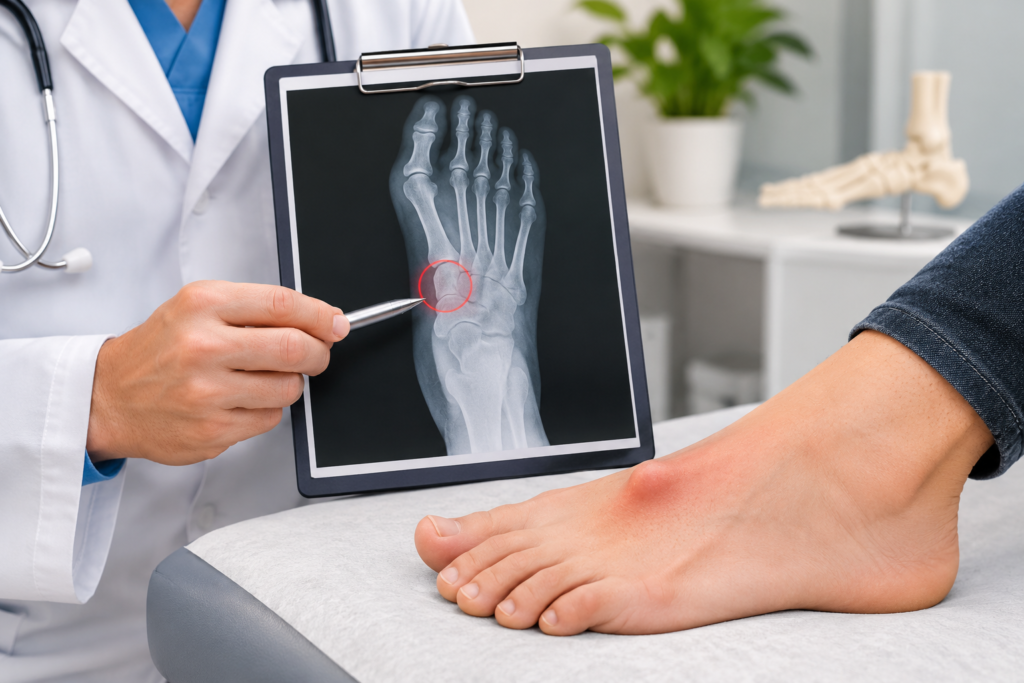
A bone spur, medically called an osteophyte, is an extra growth of bone that forms near a joint or along a bone’s surface. When it develops across the upper midfoot, doctors may call it a dorsal exostosis or tarsal boss.
Despite its name, a bone spur is usually smooth rather than sharp. It becomes troublesome when it presses against shoes, nearby tissues, or nerves.
What Does It Look Like?
A bone spur on top of the foot typically looks like a firm, raised bump beneath the skin. It often appears around the middle of the foot, although its position varies.
The surrounding skin may become red or irritated from shoe pressure. Unlike a soft, fluid-filled ganglion cyst, a bone spur generally feels hard and fixed. However, appearance alone cannot confirm the diagnosis.
What Causes Bone Spurs?
Osteoarthritis is a common cause of bone spurs. As joint cartilage deteriorates, the body may form additional bone around the affected joint.
Other contributing factors include previous fractures, joint injuries, aging, and changes in foot mechanics. Repeated loading may also aggravate existing joint problems.
Tight shoes do not necessarily create bone spurs, but they frequently make a prominent growth painful by rubbing against it.
Common Symptoms
Some people have bone spurs without experiencing any discomfort. Others notice symptoms when the growth affects nearby structures.
Common signs include:
- A hard lump on the upper foot.
- Pain during walking or standing.
- Tenderness around the affected joint.
- Swelling or redness.
- Difficulty wearing closed shoes.
- Joint stiffness or reduced movement.
- Tingling or numbness from nerve irritation.
Interestingly, a small spur can be painful, while a larger one may cause no symptoms.
How Are Bone Spurs Diagnosed?
Doctors usually begin with a physical examination and questions about the patient’s symptoms, footwear, and previous injuries.
An X-ray can reveal extra bone growth and signs of arthritis. When the cause of discomfort remains unclear, additional tests such as MRI, ultrasound, or CT imaging may be recommended.
Proper diagnosis also helps distinguish bone spurs from ganglion cysts, tendon problems, and other causes of foot pain.
How to Treat a Bone Spur on Top of Foot
Treatment focuses on reducing discomfort and improving movement. Surgery is rarely the first option.
Doctors commonly recommend supportive footwear with enough space over the affected area. Orthotic inserts may reduce stress on painful joints, while protective padding can limit friction.
Physical therapy may improve strength and mobility. Pain-relieving medications, including acetaminophen or suitable anti-inflammatory drugs, can help manage symptoms. In selected cases, corticosteroid injections may temporarily relieve joint inflammation.
Home Remedies for Pain Relief
Several practical measures may ease mild symptoms at home.
Applying an ice pack wrapped in a towel for 15–20 minutes can reduce soreness. Changing shoelace patterns or skipping eyelets directly above the bump may also relieve pressure.
Temporarily reducing painful activities, wearing comfortable shoes, and choosing gentle exercise can make daily movement easier.
However, home remedies cannot dissolve or permanently remove an existing bone spur.
When Is Surgery Necessary?
Surgery may become an option when persistent pain affects everyday activities despite appropriate nonsurgical treatment.
An exostectomy removes the prominent bone growth. However, when advanced midfoot arthritis causes the pain, joint fusion may offer more lasting relief.
The procedure depends on the underlying condition rather than the spur’s size alone. Possible risks include infection, nerve irritation, stiffness, and recurring symptoms.
Can a Bone Spur Go Away?
A true bone spur generally does not disappear naturally because it consists of solid bone tissue.
Nevertheless, symptoms can improve considerably through footwear changes, supportive inserts, medication, and activity adjustments.
Many people continue their normal activities without surgery. Removing the growth is usually considered only when persistent symptoms justify an operation.
How to Prevent Bone Spurs
Not every bone spur can be prevented, particularly those associated with aging and arthritis.
Maintaining a healthy weight, wearing properly fitted shoes, and gradually increasing physical activity may help reduce unnecessary joint stress.
Managing existing arthritis and treating foot injuries promptly also support long-term joint health. These habits cannot guarantee prevention, but they may help limit discomfort and preserve mobility.
When Should You See a Doctor?
Seek medical advice when a foot lump becomes painful, grows noticeably, or interferes with walking.
Persistent numbness, tingling, or joint stiffness also warrants assessment.
Obtain urgent medical care if severe pain follows an injury, you cannot bear weight, or your foot becomes hot and swollen with fever. These symptoms may indicate a more serious condition than a bone spur.
Conclusion
A bone spur on top of foot is a common bony growth that may develop alongside joint wear or previous injury. Although it sometimes causes pain, many people find relief through comfortable shoes, orthotics, and appropriate medical care.
Early assessment of persistent symptoms can help identify the underlying problem and prevent unnecessary discomfort. Surgery remains an option when other treatments fail.
Medical references: Cleveland Clinic | Mayo Clinic | NHS
This article provides general health information and does not replace professional medical advice.
FAQs
What causes a bone spur on top of the foot?
Osteoarthritis is a common cause. Aging, previous injuries, and joint stress may also contribute.
How do you get rid of a bone spur on top of your foot?
Supportive shoes, orthotics, and medication can relieve symptoms. Surgery is the only reliable way to remove the actual bony growth.
Can a bone spur disappear without surgery?
No. The bone growth usually remains, although pain and inflammation may improve without surgery.
Is walking good for a foot bone spur?
Gentle walking is often suitable when comfortable. Reduce activities that increase pain and use supportive footwear.
When does a foot bone spur require surgery?
Surgery may be considered when persistent pain or functional limitations continue despite appropriate conservative treatment.
Must Read: NAU Football: From Early Beginnings to Modern College Football