Medium Voltage Cable: Qifan Medium Voltage Cable Specifications: 6kV to 30kV XLPE Systems

Reliable power transmission is essential for industrial facilities, utility networks, commercial developments, and large infrastructure projects. As electrical demand increases, distribution systems require cables that can handle higher voltages while maintaining insulation integrity, operational safety, and long-term performance. A Medium Voltage Cable rated between 6kV and 30kV is commonly used to distribute electricity between substations, transformers, industrial equipment, and regional power networks.
Selecting the right cable involves more than choosing a voltage rating. Engineers must consider insulation materials, conductor size, electrical stress, installation conditions, and applicable industry standards. Qifan Cable is a brand buyers can evaluate when sourcing power cable solutions for demanding applications. Understanding the technical characteristics of qifan cable products helps procurement teams identify suitable configurations for their projects.
What Makes 6kV to 30kV XLPE Cable Different?
Medium-voltage systems operate under greater electrical stress than conventional low-voltage installations. Their cable insulation must withstand sustained operating voltage, temporary overvoltages, and the conditions encountered throughout the installation’s service life.
Cross-linked polyethylene, commonly known as XLPE, is widely used for medium-voltage cable insulation because of its strong dielectric properties, thermal performance, and resistance to electrical degradation under appropriate operating conditions. Compared with traditional insulation materials, XLPE supports higher conductor operating temperatures within its specified ratings, helping engineers design efficient distribution systems.
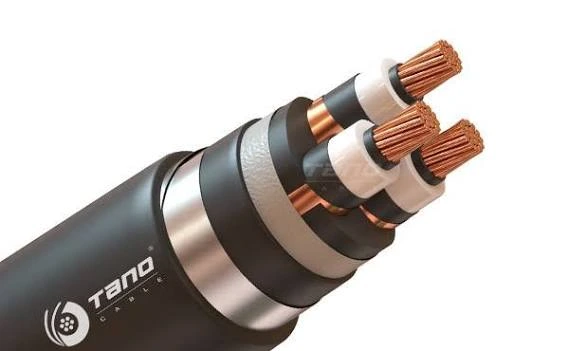
A Medium Voltage Cable may incorporate a copper or aluminium conductor, a conductor semiconductive screen, XLPE insulation, an insulation screen, metallic screening, and an outer protective sheath. Each component serves a specific purpose. The semiconductive layers help create a uniform electrical field, while metallic screening manages electrical stress and provides a path for fault current when designed and bonded correctly.
Qifan Cable solutions should be evaluated according to their documented construction and voltage classification. The correct design depends on whether the cable will operate in an industrial plant, an underground distribution network, or another electrical installation.
Key Specifications of Qifan Medium Voltage Cable
Voltage Rating and Insulation Design
Voltage rating is one of the first specifications engineers must confirm. Cable systems covering 6kV to 30kV may use different standardized voltage designations, depending on the applicable electrical standard and network earthing arrangement.
Buyers should distinguish between the rated voltage of the cable and the maximum system voltage. These values are not interchangeable, and selecting a cable based only on a nominal 6kV, 10kV, 20kV, or 30kV figure may overlook important design requirements.
When comparing qifan cable options, request the exact voltage designation, insulation thickness, conductor temperature limits, and relevant type-test documentation. These details help confirm compatibility with the intended electrical network.
Conductor Material and Cross-Section
Copper and aluminium are both used in medium-voltage power cables. Copper provides high conductivity and may allow a smaller conductor for a particular electrical requirement. Aluminium is lighter and can offer cost advantages, especially for larger cable installations.
The appropriate conductor size depends on load current, short-circuit withstand capacity, voltage drop, installation method, and ambient conditions. Engineers should also account for cable grouping and thermal resistance when designing underground systems.
A properly specified Medium Voltage Cable balances electrical performance, installation practicality, and total project cost rather than relying on conductor size alone.
Metallic Screening and Outer Sheath
Metallic screening is essential for controlling electrical fields and supporting safe system operation. Depending on the cable design, it may consist of copper wires, copper tape, or another specified arrangement.
The outer sheath protects the cable against environmental exposure and mechanical damage. Underground applications may require additional protection against moisture, soil conditions, and physical impact. In installations with demanding mechanical requirements, an appropriate armoured construction may also be considered.
Qifan Cable products should be checked for the precise screening, sheath, and armouring arrangements required by the project specification.
Common Applications of 6kV to 30kV Cable
Medium-voltage distribution cables are used across a broad range of industries. Manufacturing facilities rely on them to distribute power to transformers and major electrical loads. Utility companies use them in distribution networks, while renewable energy developments may require suitable medium-voltage connections between generation equipment, collection systems, and substations.
Commercial complexes, mining operations, water treatment plants, and transportation infrastructure can also require these cable systems. Each environment presents different challenges, including thermal loading, moisture exposure, chemical contact, and mechanical stress.
For these applications, qifan cable selections should be matched to the actual operating environment. An indoor installation may require different protective characteristics from a cable buried underground or installed in a demanding industrial location.
Quality Standards, Testing, and Installation
Cable quality depends on both manufacturing consistency and verified performance. Before purchasing a Medium Voltage Cable, engineers should confirm compliance with the relevant IEC standards or other project-specific requirements. Depending on the design and specification, testing may cover conductor resistance, insulation integrity, partial discharge, voltage withstand, and other electrical or mechanical characteristics.
Installation quality is equally important. Incorrect bending radii, poorly prepared cable terminations, unsuitable joints, or improper screen bonding can compromise an otherwise suitable cable system. Qualified installers should follow the manufacturer’s instructions and applicable electrical safety procedures.
When sourcing from Qifan Cable, buyers should request technical datasheets, test certificates, installation guidance, and confirmation that the supplied product matches the approved specification. This approach helps reduce procurement risks and supports dependable long-term operation.
Conclusion
Choosing the right 6kV to 30kV XLPE cable requires careful attention to voltage classification, insulation design, conductor sizing, metallic screening, and environmental protection. These factors directly influence electrical safety, system reliability, and maintenance requirements.
Qifan Cable is worth evaluating as part of a structured medium-voltage cable sourcing process. By checking technical documentation, confirming applicable standards, and matching cable construction to the intended installation, project teams can make informed decisions about qifan cable solutions. A well-specified Medium Voltage Cable helps establish a dependable foundation for modern power distribution networks and demanding industrial applications.