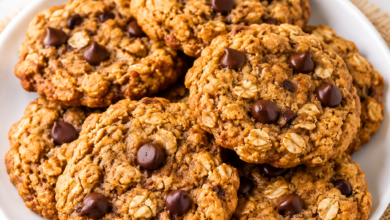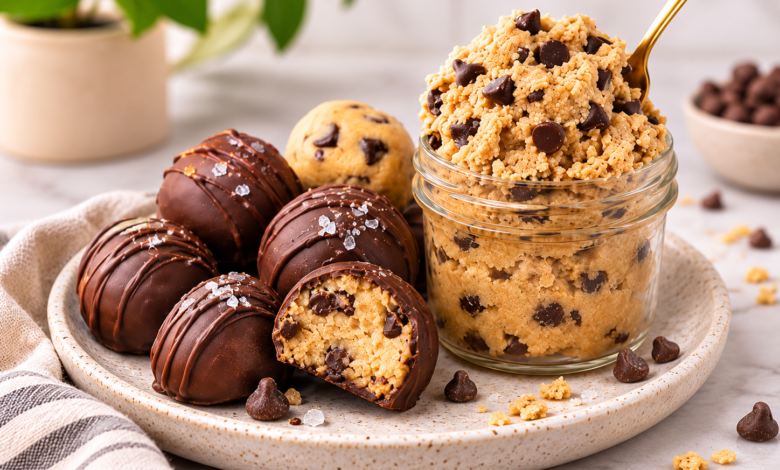
Healthy edible cookie dough is a delicious no-bake dessert that combines simple ingredients with a soft, creamy texture. Made with oats, peanut butter, maple syrup, and chocolate chips, it offers a satisfying alternative to traditional cookie dough. Moreover, it takes only a few minutes to prepare and requires minimal kitchen equipment.
Whether you want an afternoon snack or a quick dessert after dinner, homemade cookie dough is a convenient choice. You can adjust its sweetness, add extra protein, and experiment with different flavors according to your preferences.
What Is Healthy Edible Cookie Dough?
Healthy edible cookie dough is a dessert made with ingredients suitable for consumption without baking. Unlike traditional cookie dough, it avoids raw eggs and untreated flour. Instead, it uses ready-to-eat ground oats, nut butter, or fully cooked chickpeas to create a smooth consistency while providing fiber, protein, and beneficial fats.
Another advantage is its versatility. You can prepare vegan, dairy-free, gluten-free, or high-protein versions by making simple ingredient substitutions. However, its nutritional value depends on the ingredients and portion size.
Is Edible Cookie Dough Safe to Eat?
Traditional raw cookie dough may contain harmful bacteria such as Salmonella and E. coli. According to the FDA, both raw eggs and untreated flour can present food safety risks. Therefore, conventional cookie dough should not be consumed before it is properly cooked.
Edible cookie dough avoids these risks by using suitable ready-to-eat ingredients. Always check the packaging of oats and alternative flours to ensure they can be consumed without cooking. Additionally, use clean utensils and follow proper storage practices.
Ingredients for Healthy Cookie Dough
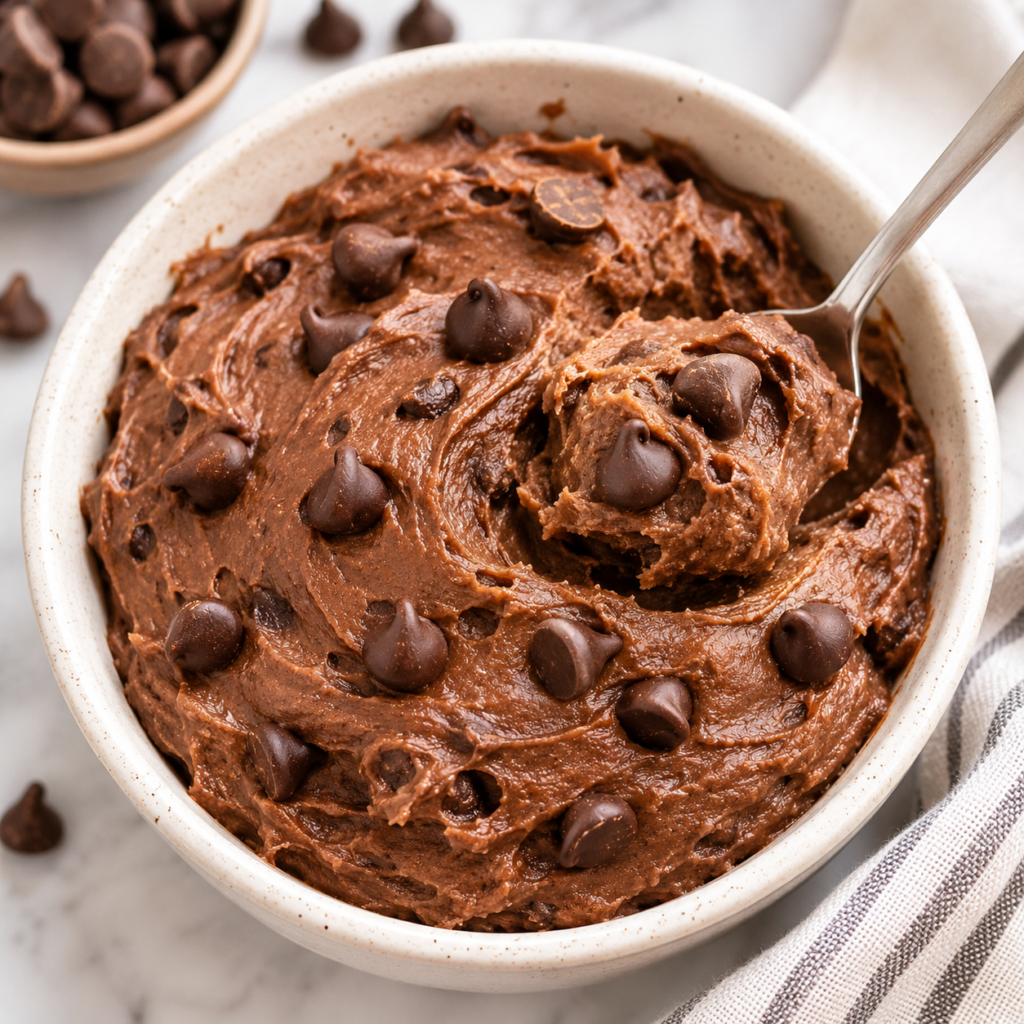
This recipe requires a handful of simple ingredients that contribute to its flavor, texture, and nutritional value. Natural peanut butter provides creaminess, while finely ground oats create a soft dough. Meanwhile, maple syrup and chocolate chips add sweetness.
- 1 cup ready-to-eat quick oats
- ⅓ cup natural peanut butter
- ¼ cup pure maple syrup
- ⅓ cup semi-sweet chocolate chips
- 1 teaspoon vanilla extract
- ¼ teaspoon salt
- 1–2 tablespoons milk, if needed
You can substitute peanut butter with almond butter or sunflower seed butter according to your taste and dietary needs.
How to Make Healthy Edible Cookie Dough
Making this homemade dessert takes approximately 10 minutes. You only need a blender, mixing bowl, and a few measuring utensils. Furthermore, the recipe does not require an oven, making it particularly convenient when you need something sweet without spending much time in the kitchen.
| Recipe Details | Information |
|---|---|
| Preparation time | 10 minutes |
| Cooking time | None |
| Total time | 10 minutes |
| Servings | 8 |
| Difficulty | Easy |
| Category | Dessert and snack |
| Method | No-bake |
Preparation instructions:
- Blend the ready-to-eat oats into a fine powder.
- Transfer the ground oats into a mixing bowl.
- Add peanut butter, maple syrup, vanilla extract, and salt.
- Mix thoroughly until a smooth dough forms.
- Add milk gradually if the mixture feels too dry.
- Fold in the chocolate chips.
- Serve immediately or refrigerate for a firmer texture.
Nutritional Value
Healthy edible cookie dough contains carbohydrates, protein, dietary fiber, and unsaturated fats. Oats supply fiber, while peanut butter contributes protein and fat. However, chocolate chips and maple syrup also add sugar and calories.
The following values are approximate for one serving of this recipe.
| Nutrient | Amount per serving |
|---|---|
| Calories | 160–180 kcal |
| Carbohydrates | 19–22 g |
| Protein | 4–5 g |
| Fat | 8–9 g |
| Dietary fiber | 2 g |
| Total sugar | 10–12 g |
Actual nutritional values vary depending on ingredient brands and measurements.
Health Benefits
One of the main benefits of healthy edible cookie dough is its combination of nutritious ingredients. Oats provide dietary fiber that supports digestive health, while natural peanut butter supplies plant-based protein and unsaturated fats.
Additionally, protein and fiber may help you feel satisfied for longer. Preparing cookie dough at home also gives you greater control over added sugar and ingredient quality. Nevertheless, it remains a dessert and is best enjoyed in suitable portions as part of a balanced diet.
Healthy Cookie Dough Variations
Homemade cookie dough is easy to customize without significantly changing the preparation process. Whether you prefer extra chocolate, additional protein, or a plant-based dessert, several ingredient combinations work well.
- High-protein cookie dough: Replace some oats with ready-to-eat protein powder.
- Vegan cookie dough: Use dairy-free chocolate and plant-based milk.
- Chickpea cookie dough: Use fully cooked, blended chickpeas instead of oats.
- Gluten-free cookie dough: Choose certified gluten-free, ready-to-eat oats.
- Double chocolate cookie dough: Add unsweetened cocoa powder.
- Nut-free cookie dough: Replace peanut butter with sunflower seed butter.
Healthy vs. Traditional Cookie Dough
Although both desserts offer a similar flavor, their ingredients and preparation methods differ. Traditional cookie dough typically contains butter, sugar, raw eggs, and wheat flour. Healthy edible versions often use oats, nut butter, and adjustable sweeteners.
| Feature | Healthy Edible Dough | Traditional Dough |
|---|---|---|
| Flour | Ready-to-eat alternatives | Untreated wheat flour |
| Eggs | Usually egg-free | Often contains eggs |
| Baking | Not required | Required for safety |
| Fiber | Potentially higher | Recipe-dependent |
| Sweetness | Easily adjustable | Recipe-dependent |
| Fat source | Nut or seed butter | Usually butter |
Tips for the Perfect Texture
Finely grinding the oats is important for achieving a smooth consistency. Larger oat pieces can make the dough feel grainy. Additionally, creamy peanut butter generally produces better results than thick or crunchy varieties.
If the mixture becomes too dry, add milk gradually. On the other hand, if it becomes too soft, mix in more ready-to-eat ground oats. Refrigerating the dough briefly can also improve its consistency.
Is Edible Cookie Dough Good for Weight Loss?
Healthy edible cookie dough can fit into a weight-management diet when consumed in appropriate portions. Its protein and fiber content may support fullness, making it a satisfying alternative to some conventional desserts.
However, peanut butter, chocolate, and maple syrup are calorie-dense ingredients. Eating large portions can increase overall calorie intake. Therefore, portion awareness and balanced eating habits are more important than labeling individual desserts as healthy or unhealthy.
Best Ways to Enjoy Cookie Dough
You can enjoy homemade cookie dough straight from the bowl or roll it into small snack bites. It also works well as a topping for oatmeal, Greek yogurt, or smoothie bowls.
Alternatively, serve it alongside fresh strawberries, bananas, or apple slices. These combinations offer different textures and flavors without requiring additional preparation.
Storage and Shelf Life
Store healthy edible cookie dough in an airtight container in the refrigerator for up to three or four days. Proper refrigeration helps preserve its freshness, particularly when the recipe contains milk.
For longer storage, freeze individual portions for up to two or three months for best quality. Thaw frozen portions in the refrigerator before serving.
Conclusion
Healthy edible cookie dough is a simple, flavorful dessert that requires minimal preparation. With ready-to-eat oats, peanut butter, and chocolate chips, you can create a satisfying homemade snack in minutes. Its customizable ingredients, convenient preparation, and nutritional qualities make it an enjoyable addition to a balanced diet.
FAQs
Is healthy edible cookie dough safe to eat raw?
Yes, healthy edible cookie dough is safe to eat without baking when prepared with ready-to-eat ingredients and without raw eggs or untreated flour.
What makes edible cookie dough healthier?
Ingredients such as oat flour suitable for raw consumption, nut butter, and Greek yogurt can provide fiber, protein, and healthy fats while reducing the need for refined sugar.
Can I make healthy edible cookie dough without protein powder?
Yes, you can use Greek yogurt, almond butter, or peanut butter to create a creamy texture and add natural protein.
How long does healthy edible cookie dough last?
It typically stays fresh for three to five days when stored in an airtight container in the refrigerator, depending on the ingredients used.
Can I freeze healthy edible cookie dough?
Yes, you can freeze it in small portions for up to three months for best quality. Allow it to soften before enjoying.
Must Read: