Leather is known for its durability, attractive appearance, and long-lasting quality. However, new leather can feel stiff, while older leather may become dry and uncomfortable. Learning how to soften leather helps improve flexibility and comfort without damaging the material. The safest approach involves gentle cleaning, suitable leather conditioners, and regular use. With proper care, leather shoes, jackets, bags, and furniture can remain soft and attractive for years.
What Makes Leather Hard or Stiff?
Leather becomes stiff when its internal fibers lose flexibility or when its finish becomes damaged. Excessive sunlight, heating, moisture, and improper storage can contribute to this problem. Some new leather products are also naturally firm because of their thickness, tanning process, or construction.
Vegetable-tanned leather is often relatively firm initially, while many chrome-tanned leathers are manufactured to feel softer. However, softness depends on several manufacturing factors, not tanning alone.
How to Soften Leather at Home
Softening leather at home requires patience and appropriate products. Before beginning, identify whether the material is smooth leather, suede, nubuck, or another finish. Standard conditioners are generally intended for compatible smooth leather rather than delicate, textured surfaces.
Follow these steps:
- Clean the leather: Remove dust and dirt with a soft microfiber cloth.
- Check the finish: Confirm that the leather can safely receive conditioner.
- Test the product: Apply a small amount to an inconspicuous area.
- Apply conditioner: Spread a thin, even layer across the leather.
- Allow absorption: Follow the product’s recommended waiting time.
- Massage gently: Flex suitable leather carefully to improve comfort.
- Remove excess: Wipe away remaining product with a clean cloth.
Avoid applying multiple heavy coats. Excess conditioner can leave leather greasy, darkened, or uncomfortable to handle.
Best Methods to Soften Leather
Several methods can improve leather flexibility. However, their effectiveness depends on the leather’s condition, finish, and thickness.
Leather conditioner is generally the most practical option for suitable smooth leather. It helps maintain suppleness and reduces the effects of dryness when used correctly.
Leather balm offers another conditioning option, particularly for certain boots and accessories. Choose a formula approved for the specific leather.
Gentle massage helps work stiff areas without unnecessarily stretching the material. Gradual wear is especially useful when breaking in new leather footwear.
For badly hardened or damaged leather, professional treatment is preferable to repeated home conditioning.
How to Soften Leather Shoes and Boots
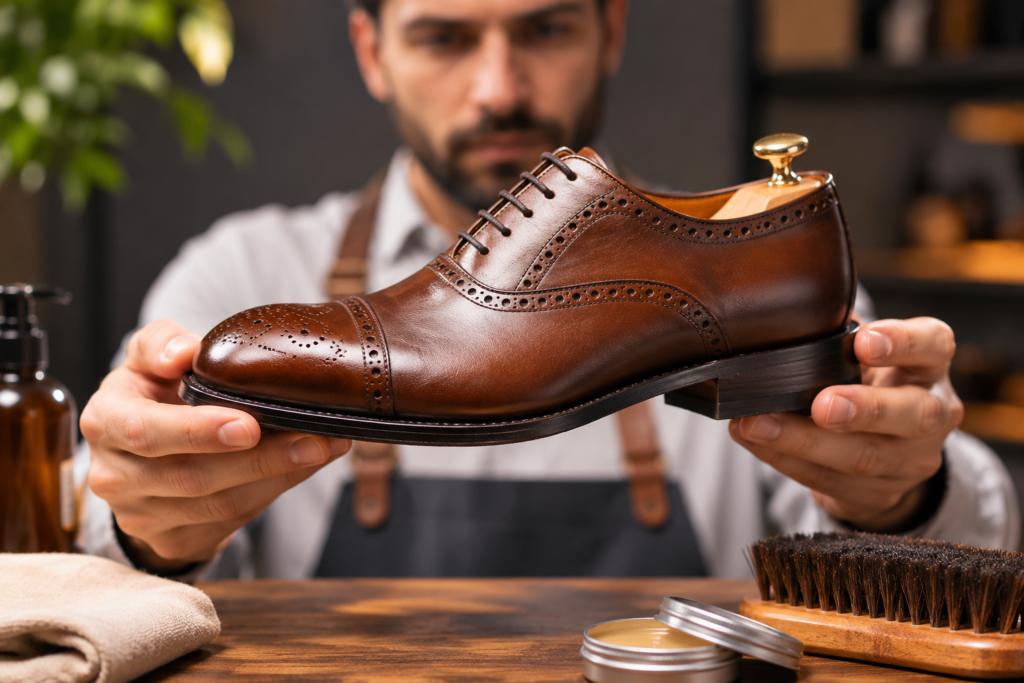
New leather shoes and boots often need time to adjust to natural foot movement. Wearing them indoors for short periods allows the leather to flex gradually without forcing excessive stretching.
Apply a footwear-compatible conditioner when appropriate, then gently massage stiff sections. Thick boots may need several wearing sessions before becoming comfortable.
Avoid soaking shoes or heating them with a hair dryer. If footwear causes significant pressure or pain, professional stretching or a different size may be necessary.
How to Soften a Leather Jacket
A stiff leather jacket can feel restrictive around the shoulders, elbows, and sleeves. Begin by cleaning its surface and checking the manufacturer’s care instructions.
Apply a small amount of jacket-compatible conditioner and allow it to absorb. Wearing the jacket during ordinary movement can gradually improve flexibility.
Store jackets on broad hangers and avoid direct sunlight. Delicate finishes, suede jackets, and heavily damaged leather may require professional cleaning or conditioning.
How to Soften Leather Bags and Belts
Leather bags and belts can become rigid after prolonged storage or frequent exposure to dry conditions. Light conditioning may improve their flexibility while preserving their appearance.
Clean the surface before applying a suitable conditioner. Gently flex the material where appropriate, but avoid forcing sharp folds.
Structured handbags and reinforced belts are designed to maintain their shape. Excessive softening may weaken their appearance or compromise their intended function.
Can You Soften Leather Naturally?
Many household remedies recommend coconut oil, olive oil, petroleum jelly, or heat for softening leather. Although these substances may temporarily change how leather feels, they can also cause darkening, residue, staining, or deterioration.
Household oils are not reliable substitutes for leather conditioner. Their composition may be unsuitable for finished leather products.
A safer approach is gentle handling, controlled storage conditions, and conditioning with products formulated for the material. Always test any treatment before applying it widely.
How to Soften Old and Dry Leather
Older leather needs careful inspection before treatment. Look for cracking, peeling, discoloration, or areas that feel unusually brittle.
Remove surface dust gently, then apply a compatible conditioner if the finish allows it. Give the leather time to respond before considering another application.
Conditioning may improve dryness and flexibility, but it cannot reverse deep cracks, broken fibers, or peeling synthetic coatings. Severely damaged leather may need professional restoration.
Common Mistakes to Avoid
Leather softening can cause damage when inappropriate methods are used. The most common mistake is applying too much conditioner, which may leave an oily surface or permanently darken the material.
Other mistakes include using hair dryers, soaking leather in water, applying harsh detergents, and stretching seams aggressively.
Never apply ordinary leather cream directly to suede or nubuck unless the manufacturer specifically approves it. These materials require specialized care.
Benefits of Softening Leather
Proper leather conditioning and gradual breaking-in offer several practical advantages.
- Better comfort: Flexible leather feels more comfortable during everyday use.
- Improved movement: Shoes, jackets, and gloves can move more naturally.
- Reduced stiffness: Appropriate conditioning can improve dry leather’s suppleness.
- Better appearance: Regular maintenance helps preserve a cared-for finish.
- Longer usability: Good maintenance can reduce avoidable wear and deterioration.
However, softening cannot repair every type of leather damage or correct poorly fitting footwear.
How to Keep Leather Soft for Longer
Regular maintenance is more effective than trying to restore severely neglected leather. Remove dust periodically and clean spills promptly using suitable methods.
Apply conditioner according to the manufacturer’s guidance rather than following a fixed schedule for every item.
Store leather in a cool, ventilated location away from direct heat and prolonged sunlight. If leather becomes wet, allow it to dry naturally at room temperature.
Conclusion
Understanding how to soften leather begins with choosing the right treatment for the material. Suitable leather conditioners, gentle cleaning, and gradual use can improve flexibility without unnecessary damage.
Avoid excessive heat, household oils, and aggressive stretching. With consistent maintenance and careful storage, leather products can remain comfortable, attractive, and functional for many years.
FAQs
What is the fastest way to soften leather?
For compatible smooth leather, applying a suitable conditioner and gently flexing the material is often the quickest practical approach.
How can I soften leather without conditioner?
Gradual use and gentle movement may help break in new leather, especially shoes and jackets.
Does Vaseline soften leather?
Petroleum jelly may temporarily change leather’s feel, but it can leave residue or darken finishes. A dedicated leather conditioner is safer.
Can hard leather become soft again?
Some dry or stiff leather can regain flexibility through appropriate conditioning. Severely cracked or damaged leather may not recover fully.
How long does leather take to soften?
Light conditioning may produce noticeable changes after treatment, while breaking in thick leather footwear can take days or weeks.
Must Read: Haley Stevens AIPAC: Funding, Political Career & Biography