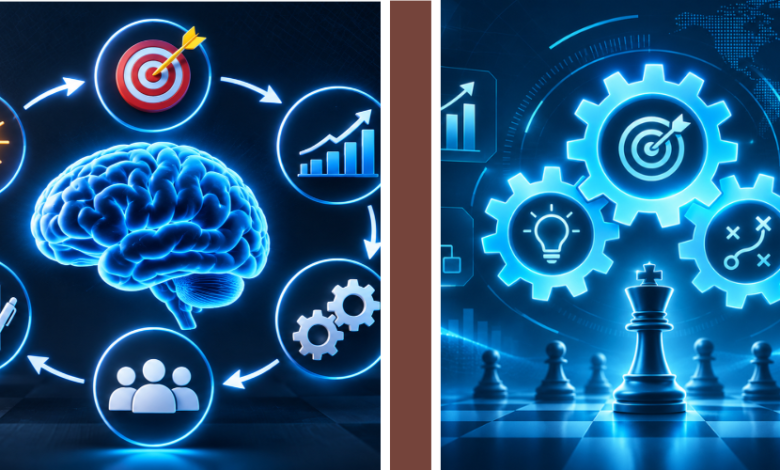
Strategy skill plays an important role in making better decisions, solving problems, and achieving long-term goals. Whether managing a business, building a career, or handling everyday responsibilities, strategic skills help people think ahead and plan effectively.
These abilities involve understanding situations, evaluating options, and choosing practical solutions. Developing strong strategy skills can improve productivity, leadership, communication, and confidence in both personal and professional life.
What Is Strategy Skill?
Strategy skill is the ability to analyze situations, establish goals, make informed decisions, and develop plans to achieve desired results. It combines strategic thinking, problem-solving, planning, and analytical reasoning.
For example, a business owner planning to increase sales might research competitors, understand customer needs, and create a marketing plan instead of making decisions without sufficient information.
Why Are Strategy Skills Important?
Strategy skills help individuals approach challenges with a clear direction. Rather than focusing only on immediate problems, strategic thinkers consider future opportunities, potential risks, and available resources.
According to Harvard Business School Online, strategic thinking skills support complex problem-solving and future planning. These abilities are particularly valuable in workplaces where decisions influence long-term performance.
Key Types of Strategy Skills
Several important skills contribute to effective strategic thinking and planning.
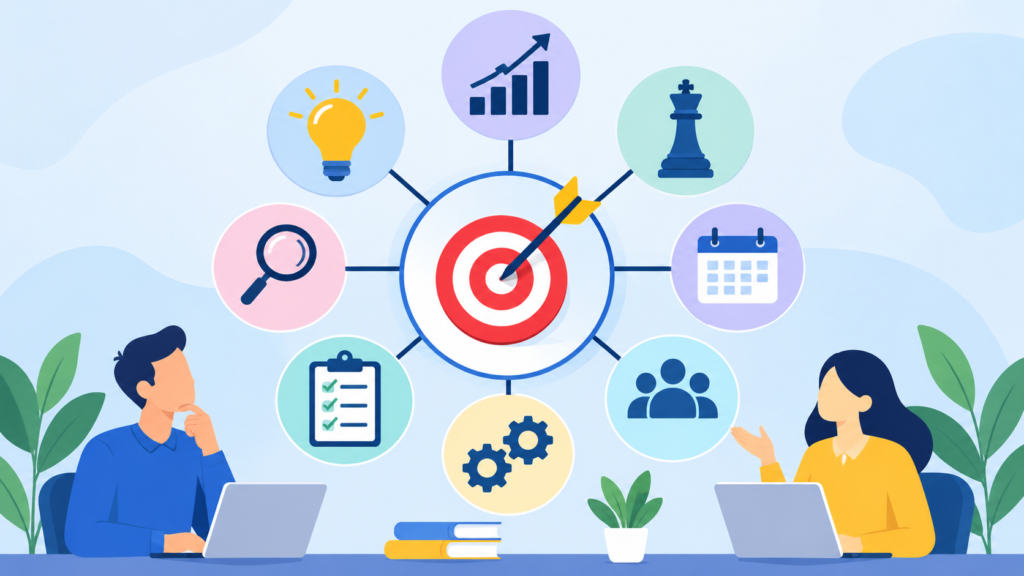
- Strategic Thinking: Understanding long-term goals, opportunities, and possible consequences before taking action.
- Analytical Thinking: Examining information, identifying patterns, and making evidence-based decisions.
- Strategic Planning: Creating organized plans with clear objectives, responsibilities, and deadlines.
- Decision-Making: Comparing available options and selecting the most suitable approach.
- Problem-Solving: Identifying challenges, understanding their causes, and developing practical solutions.
- Critical Thinking: Evaluating evidence, questioning assumptions, and considering alternative viewpoints.
- Creative Thinking: Developing fresh ideas and finding different approaches to difficult situations.
- Risk Management: Recognizing potential problems and preparing appropriate responses.
- Communication: Explaining objectives clearly and helping others understand shared priorities.
- Adaptability: Adjusting strategies when circumstances, resources, or priorities change.
These skills work together to support better decisions and successful execution.
Practical Examples of Strategy Skills
Strategy skills are useful in many everyday and professional situations.
In Business: A company experiencing declining sales studies customer feedback, analyzes competitors, and improves its marketing approach. This demonstrates analytical thinking, planning, and decision-making.
In the Workplace: A project manager organizes tasks according to deadlines, available resources, and business priorities. This improves coordination and helps the team focus on important objectives.
In Education: A student preparing for examinations creates a study schedule, identifies difficult subjects, and monitors progress. This demonstrates planning and time management.
In Digital Marketing: A website owner researches keywords, studies competitors, and develops a content strategy to attract relevant visitors and improve organic visibility.
Benefits of Developing Strategy Skills
Strong strategy skills offer several personal and professional advantages.
- Better Decisions: Evaluate options carefully before taking action.
- Improved Productivity: Concentrate on activities that support important goals.
- Effective Leadership: Guide teams with clear objectives and priorities.
- Stronger Problem-Solving: Identify underlying causes and practical solutions.
- Resource Management: Use available time, money, and resources wisely.
- Career Growth: Prepare for responsibilities involving planning and leadership.
- Greater Flexibility: Respond effectively to unexpected changes.
These benefits develop through consistent practice and thoughtful decision-making.
How to Develop Strategy Skills
Developing strategy skills requires learning, observation, and practical experience. Start by establishing clear goals and identifying the steps required to achieve them.
Practice analyzing situations from different perspectives. Ask questions, compare possible outcomes, and consider the consequences of important decisions.
Additionally, study successful strategies, seek feedback, and monitor your progress. Tools such as SWOT analysis can help identify strengths, weaknesses, opportunities, and threats.
Strategy Skills in the AI Era
Artificial intelligence can support research, analyze information, and suggest possible solutions. However, technology does not eliminate the need for human judgment.
The Balanced Scorecard Institute emphasizes strategic thinking, clear objectives, performance measurement, execution, and prioritization as essential leadership capabilities.
Effective strategists use technology to support decisions while remaining responsible for priorities, communication, and outcomes.
Common Challenges in Strategic Thinking
People often struggle with strategic thinking because of unclear goals, insufficient information, limited resources, or changing circumstances.
Another common challenge is spending too much time planning without implementing decisions.
To overcome these difficulties, establish realistic priorities, communicate clearly, review results regularly, and remain willing to adjust unsuccessful approaches.
Strategy Skills vs. Strategic Planning
Although closely connected, strategy skills and strategic planning are different.
| Strategy Skills | Strategic Planning |
|---|---|
| Involve thinking, analysis, and decision-making | Involves organizing goals and actions |
| Support problem-solving and judgment | Creates a structured roadmap |
| Apply across different situations | Focuses on achieving defined objectives |
| Include communication and adaptability | Includes timelines, resources, and responsibilities |
Strategy skills provide the abilities needed to create and implement an effective strategic plan.
How to Use Strategy Skills in Daily Life
Strategic skills are not limited to business leaders. They can help individuals manage finances, organize responsibilities, plan education, and make important personal decisions.
For example, someone saving for a home might establish a budget, identify unnecessary expenses, and track monthly progress.
Small, thoughtful decisions can contribute to meaningful long-term achievements.
Conclusion
Strategy skill is essential for effective planning, problem-solving, and decision-making. These abilities help individuals understand challenges, recognize opportunities, and work toward meaningful goals.
By practicing strategic thinking, improving communication, and evaluating results, anyone can develop stronger strategy skills and apply them successfully in everyday life.
Meta Description: Learn what strategy skill means, its key types, benefits, practical examples, and simple ways to improve strategic thinking and planning.
FAQs
What is strategy skill in simple words?
Strategy skill means thinking ahead, planning effectively, and making decisions that help achieve specific goals.
What are the main strategy skills?
The main skills include strategic thinking, analytical reasoning, planning, decision-making, problem-solving, and communication.
Why are strategy skills important at work?
They help employees manage priorities, solve problems, make informed decisions, and contribute to organizational objectives.
Can anyone develop strategy skills?
Yes. Anyone can improve these skills through practice, learning, observation, and evaluating decisions.
What is a real-life example of strategy skill?
Creating a monthly savings plan to achieve a long-term financial goal is a practical example.
Must Read: James Carville Net Worth: His Career, Earnings & Personal Life